
Clean-Label Ingredients for Plant-Based Dairy Alternatives
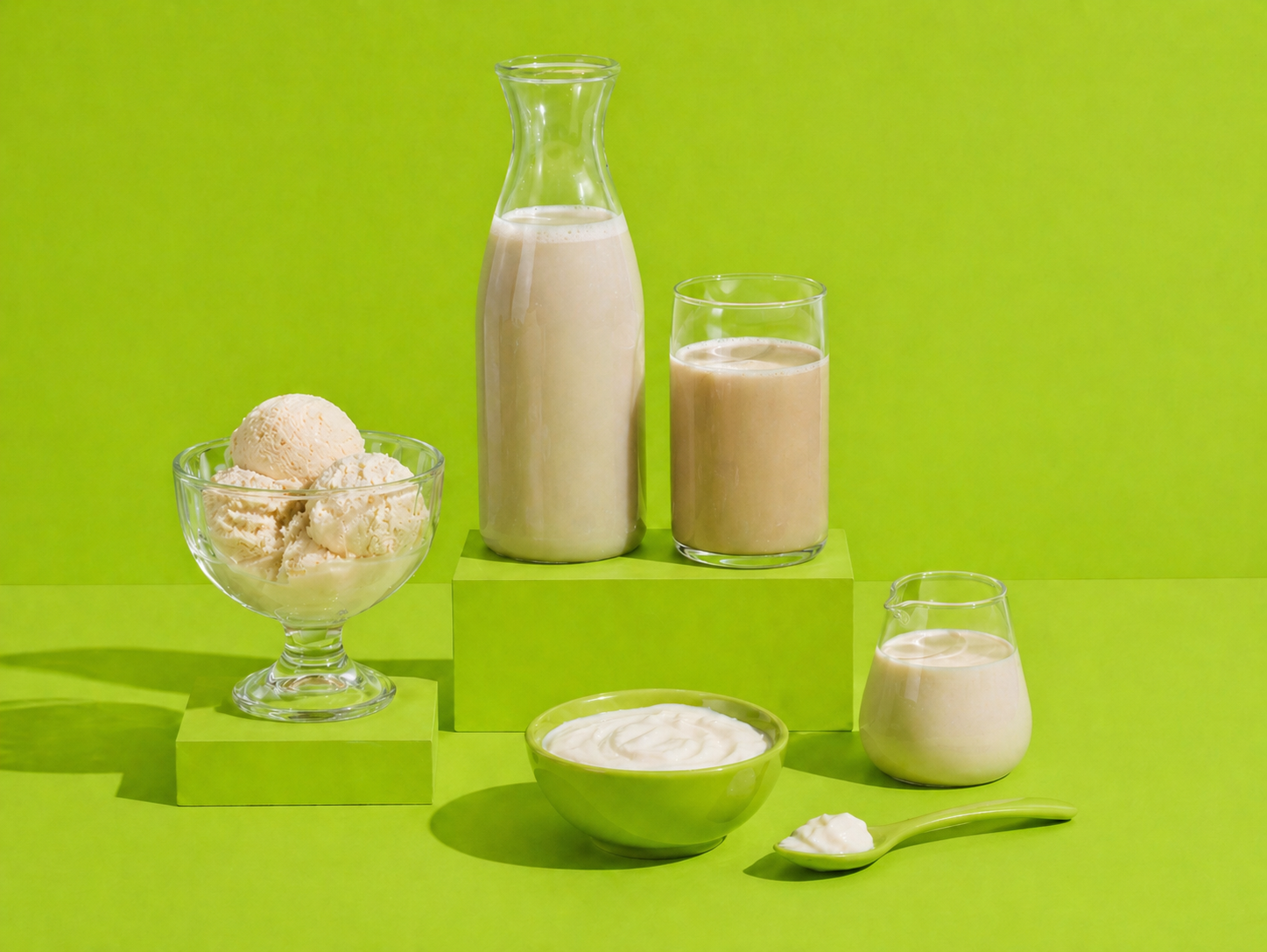
Clean-Label Ingredients for Plant-Based Dairy Alternatives
Plant-based dairy alternative ingredients have come a long way since the first wave of oat milks and plant-based yogurts hit the shelf. But the category still has a problem. Too many consumers tried a product, didn't love the taste or texture, and never came back. The gap between consumer interest and repeat purchase is where ingredient choices make or break an alt-dairy product.
SPINS data from the 52 weeks ending November 2, 2025 shows total refrigerated plant-based milk sales slipped 3%, from $2.50 billion to $2.45 billion. The category isn't collapsing. It's maturing. And the brands gaining share right now are the ones getting the formulation right.
This guide breaks down what went wrong with first-gen products, where the growth pockets are, and how to build clean-label plant-based dairy products that earn repeat purchases.
Where the Growth Is in Plant-Based Dairy (2025 Data)
The top-line numbers don't tell the full story. Category-level sales dipped, but specific segments are posting strong gains. The opportunity for formulators is in choosing the right ingredient combinations for the formats that are actually growing.
NielsenIQ points to several factors behind the overall slowdown: marketplace maturation, inflation driving more selective purchasing, the return of lactose-free dairy options, and competition from functional beverages.
The growth data tells a different story at the segment level.
Plant-Based Milk Growth by Format (SPINS, Nov 2024 - Nov 2025)
SegmentCombined Retail GrowthNatural Channel GrowthRefrigerated coconut milk+17.3%+40.5%Shelf-stable coconut milk+28.5%--Shelf-stable soy milk+18.5%+17.2%Refrigerated soy milk+2.4%+8.2%Shelf-stable novel/blended+7.2%--Shelf-stable rice milk+5.7%--
Beyond milk, the natural channel shows strong momentum in adjacent categories: plant-based butter grew 8.4%, plant-based sour cream rose 5.8%, and plant-based cottage cheese jumped 28.6%.
The takeaway: formulate for where the growth is, not where the category peaked.
What Went Wrong with First-Gen Alt-Dairy Products
Understanding why consumers walked away helps formulators avoid repeating the same mistakes. The problems fall into three categories.
Texture failures. Gritty, mealy mouthfeel was the most common complaint. This came from poorly processed plant proteins paired with poor separation on the manufacturing level. When proteins and starches aren't broken down and separated properly during production, the finished product feels grainy on the palate.
Flavor masking. Earthy and vegetal off-flavors from the protein source required heavy masking. The result was a product that tasted artificial or over-processed.
Label problems. Consumers wanted the sustainability and health story of plant-based dairy. They didn't want the long, complicated ingredient lists that came with it. Labels with unrecognizable ingredients made products seem less like real food, not more.
Today's consumer expects both. A product that tastes right and a label they can read.
The pitfall for current R&D teams: treating clean labeling as something you back into after selecting your functional ingredients. Clean label needs to be a starting requirement, not a post-formulation adjustment.
The Certification Stack That Makes Clean Labels Work
A clean-label alt-dairy product is only as clean as its ingredient supply chain. Certifications, manufacturing standards, and sourcing transparency all show up on the finished product label.
Sweet Additions manufactures its full ingredient portfolio across two domestic facilities in Wisconsin: Cameron and Dresser. The Cameron facility runs glucose syrups through an evaporator, and maltodextrins, syrup solids, and dairy alternatives through a dryer. The Dresser facility produces AvenaBase liquid oat base, AvenaDex dry oat base, and AvenaPro oat protein concentrates.
Certification Coverage Across Product Lines
CertificationCoverageNON-GMOAll product linesUSDA OrganicSyrups, maltodextrins, syrup solids, proteins, dairy alternativesSQF & GFSI CertifiedBoth facilitiesManufactured in USAFull portfolioGluten-FreeSelect products (AvenaBase, soluble tapioca fiber)HypoallergenicSelect products (AvenaBase, soluble tapioca fiber)KosherCertified
AvenaBase, the oat milk base that anchors many plant-based dairy formulations, carries one of the broadest certification profiles: NON-GMO, Organic, Gluten-Free, Hypoallergenic, SQF Certified Facility, Manufactured in the USA.
For procurement teams, these certifications reduce the compliance burden during product development. You're not chasing down certifications after formulation is locked. They're built into the ingredient from the start.
Oat Protein: Solving the Flavor and Nutrition Problem
Plant-based dairy consumers want real nutrition from their products, not just a dairy substitute with a sustainability pitch. AvenaPro oat protein concentrate addresses both the flavor and nutrition gaps that plagued earlier products.
AvenaPro delivers 60% protein concentration, with ongoing R&D focused on increasing this to 80%. The flavor profile is mild and toasted with a neutral character. That's a direct solve for one of the biggest complaints about first-gen plant-based dairy: off-flavors from the protein source that required heavy masking. AvenaPro doesn't need it.
A few details on the amino acid and nutritional profile:
- Nearly complete amino acid profile with lysine as the only limiting amino acid
- Anticipated PDCAAS score of approximately 0.6 (still under certified lab testing; 1.0 indicates a complete protein)
- Straightforward to blend with complementary proteins like pea or soy for nutritionally complete combinations
- 20% of content provides dietary fiber that helps stimulate probiotic growth, delivering protein and fiber functionality from a single ingredient
The production process adds another layer of value. AvenaPro is produced through enzymatic processing that isolates and purifies protein from upcycled oat concentrate. The oat byproduct stream from Sweet Additions' existing production of oat-derived sweeteners, bases, and maltodextrins becomes a high-value protein ingredient. It carries Organic, Non-GMO, Gluten-Free, Allergen-Free, and GRAS status.
In formulation testing, Sweet Additions' technical team developed a protein ball application delivering 11 grams of protein at just 80 calories per ball. This demonstrates AvenaPro's capacity for high-protein, low-calorie functional food applications including nutritional bars, baked goods, and confectionery.
Soluble Fiber: Double Duty in Alt-Dairy Formulations
Fiber is a consistent purchase driver in functional foods and beverages. Consumers actively seek products that support digestive health, and plant-based dairy alternatives are no exception.
TapiFi is a resistant dextrin powder derived from tapioca starch. It's converted into beneficial, non-digestible carbohydrates through a natural enzymatic hydrolysis process. The fine powder form is soluble in various liquids, making it well suited for beverage and dairy-alternative formats.
TapiFi pulls double duty in alt-dairy formulations:
- Nutritional benefits: Digestive health support, heart health, satiety, blood sugar balance
- Formulation benefits: Contributes creaminess, bulk, and mild sweetness to finished products
For alt-dairy formulators trying to build body and mouthfeel without adding a long list of additives, a single ingredient that delivers both nutritional and textural benefits simplifies the ingredient deck. TapiFi is certified NON-GMO and Hypoallergenic, manufactured in a GFSI certified facility.
Two Approaches to Sugar Reduction
Consumers want reduced sugar in their plant-based dairy products. They won't accept reduced taste. Sweet Additions offers two distinct approaches, each suited to different formulation goals.
AlluSweet vs. TapiSweet LS: Sugar Reduction Comparison
FeatureAlluSweet (Allulose)TapiSweet 42 LS (Low-Sugar Tapioca Syrup)Calories0.4 cal/gram (90% fewer than sucrose)Standard syrup calories with 36% less sugarSugar contentSupports "zero added sugars" label claim22g sugar vs. 35g in standard SKUBest forFlavored plant milks, plant-based yogurts, frozen dessertsIce cream, frozen desserts where syrup does structural workFunctional propertiesSweetness replacementTexture, moisture retention, crystallization controlCertificationsNON-GMO, GFSI Certified FacilityNON-GMO, Organic, GFSI Certified Facility
AlluSweet is the right choice when the sugar content itself is the primary purchase consideration and you need a label-friendly sweetness replacement.
TapiSweet 42 LS is the right choice when you need the functional properties of a glucose syrup (the structural work it does in frozen formats, for example) but want to bring sugar content down.
The full glucose syrup portfolio spans oat (AvenaSweet), rice (RiceSweet), and tapioca (TapiSweet) sources, with DE values ranging from 28 to 60. All are NON-GMO, Organic, and Hypoallergenic.
One formulation tip: matching the syrup source to the base of your product keeps the ingredient deck consistent. An oat-based dairy alternative paired with an oat-derived syrup reads cleaner on the label.
The Supporting Ingredients That Make It All Work
Protein, fiber, and sweeteners get the attention. Maltodextrins, syrup solids, and oat bases are the ingredients that make an alt-dairy product actually function on the shelf.
Maltodextrins vs. Syrup Solids: Function Comparison
FeatureMaltodextrins (DE 10-20)Syrup Solids (DE 28-35)Sweetness levelLowModeratePrimary functionsMoisture control, viscosity building, stabilization, bulking, bindingSweetening, flavor enhancement, moisture retention, binding, textureFrozen applicationsIce crystal growth control--Spray-dried applicationsDrying aids for powdered dairy alternativesSweetness and binding in dry formatBar applicationsAdhesion, chewy textureFlavor enhancement, bindingSources availableAvenaDex (oat), RiceTrin (rice), TapiDex (tapioca)AvenaDex (oat), RiceTrin (rice), TapiDex (tapioca)CertificationsNON-GMO, Organic, SQF/GFSI CertifiedNON-GMO, Organic, SQF/GFSI Certified
AvenaBase: The Foundation Ingredient
AvenaBase is a versatile oat-based concentrate made from oat flour, designed for solubility in beverages. It comes in liquid or spray-dried formats, with DE values of 7, 16, 23, and 35.
The DE value selection directly affects your finished product:
- DE 7: Less sweetness, more body. Best for products where you want a thick, creamy base.
- DE 16-23: Mid-range balance of sweetness and body. Versatile for most dairy alternative formats.
- DE 35: More sweetness, thinner texture. Best for lighter-bodied beverages.
Sweet Additions developed an instant oat milk and instant oat milk latte sample using spray-dried AvenaBase. The preparation is simple: add 1/3 cup of powder to 8oz water, stir for one minute, and the product is ready. Convenience formats like this represent real growth opportunity for the alt-dairy category.
Why Domestic Manufacturing Matters
Supply chain reliability shows up as a competitive advantage when you're developing products on tight timelines.
Sweet Additions has operated since 2005 and landed its first multinational customer in 2006. The capacity expansion timeline shows a company building toward today's alt-dairy opportunity:
- 2013: Acquired Cameron, WI facility and maltodextrin product line
- 2015: Launched glucose syrup line at Cameron
- 2019: Launched oat product line for plant-based beverages
- 2021: Acquired Dresser facility
- 2022: Launched oat base line at Dresser
- 2024: Launched oat protein product line
Two domestic facilities with different production capabilities means formulators can source multiple ingredients from a single supplier. That reduces lead times, simplifies logistics, and keeps the supply chain shorter.
Custom solutions are part of the operating model. The Dresser facility is oat-derived by default but can be customized from any starch source. For R&D teams working on new product concepts, your ingredient partner can adapt to your formulation needs rather than forcing you to work within rigid product specs.
Frequently Asked Questions
What certifications should I look for in plant-based dairy alternative ingredients?At minimum, look for NON-GMO verification, USDA Organic certification, and manufacturing in an SQF or GFSI certified facility. For allergen-sensitive consumers, Gluten-Free and Hypoallergenic certifications add label value. Ingredients manufactured in the USA provide supply chain transparency and shorter lead times.
What causes gritty mouthfeel in plant-based milk, and how do I fix it?Gritty or mealy texture in plant-based dairy typically comes from poorly processed plant proteins paired with poor separation on the manufacturing level. Using a smooth, fluid oat-based concentrate like AvenaBase (available in liquid or spray-dried form, DE values 7-35) provides a clean base with adaptable texture for different beverage formats.
Can I reduce sugar in plant-based dairy without changing the taste?Yes. AlluSweet provides 90% fewer calories than sucrose and supports a "zero added sugars" label claim. TapiSweet 42 LS reduces sugar by 36% compared to standard tapioca syrup and maintains the functional properties (moisture retention, texture, crystallization control) the syrup contributes to frozen and structured formats.
What protein sources work well in plant-based dairy formulations?Oat protein concentrates offer a mild, toasted flavor that integrates without heavy masking. AvenaPro delivers 60% protein concentration with a nearly complete amino acid profile. Lysine is the only limiting amino acid. Blending with complementary proteins like pea or soy creates nutritionally complete protein combinations.
How do maltodextrins improve plant-based dairy products?Maltodextrins (DE values 10-20) serve multiple functions in alt-dairy formulations: moisture control, viscosity building, stabilization, and ice crystal control in frozen products. They act as spray-drying aids for powdered dairy alternatives and as bulking agents in dry mixes. Sources include oat, rice, and tapioca.
Are there fiber ingredients that also improve texture in dairy alternatives?TapiFi, a resistant dextrin derived from tapioca starch through natural enzymatic hydrolysis, contributes digestive health benefits and helps build body and creaminess in alt-dairy formulations. It adds mild sweetness. The fine powder dissolves in various liquids, making it suitable for both beverage and spoonable dairy-alternative formats.
What's the advantage of sourcing from a domestic ingredient manufacturer?Domestic manufacturing shortens lead times, reduces shipping costs, and simplifies supply chain logistics. Sweet Additions operates two facilities in Wisconsin (Cameron and Dresser) producing the full range of oat, rice, and tapioca-derived ingredients. Custom formulations and sample development move faster when your ingredient supplier is in the same time zone.
Can one supplier provide all the ingredients I need for a plant-based dairy product?A single supplier with a broad portfolio can provide the oat base, protein, fiber, sweeteners, maltodextrins, and syrup solids needed for most alt-dairy formulations. This reduces qualification time, simplifies purchasing, and keeps the ingredient deck consistent across plant sources.
What's the difference between syrup solids and maltodextrins in dairy alternative formulations?Maltodextrins (DE 10-20) are less sweet and function primarily as bulking agents, stabilizers, and moisture controllers. Syrup solids (DE 28-35) are sweeter and act as flavor enhancers, binders, and texture agents. Both come from the same starch sources (oat, rice, tapioca) but serve different roles in the formulation.
Is oat protein concentrate a complete protein?No. AvenaPro has a nearly complete amino acid profile, but lysine is the limiting amino acid. Its anticipated PDCAAS score is approximately 0.6 (a score of 1.0 indicates a complete protein). Blending AvenaPro with lysine-rich proteins like pea or soy creates a functionally complete protein combination for finished products.
What to Do Next
- Audit your current ingredient deck. If your alt-dairy product has more than five to seven ingredients that consumers can't pronounce, start there. Clean-label reformulation begins with ingredient selection.
- Match your protein source to your flavor system. Oat protein's mild, toasted profile eliminates the need for heavy flavor masking. Test AvenaPro at different inclusion rates to find the balance between protein content and sensory impact.
- Pick your sugar reduction strategy based on format. Use AlluSweet for "zero added sugars" claims. Use TapiSweet 42 LS when you need the functional properties of a syrup with 36% less sugar.
- Build your base with the right DE value. AvenaBase comes in DE values of 7, 16, 23, and 35. Lower DE gives you less sweetness and more body. Higher DE adds sweetness and thins the texture. Select based on your target product profile.
- Source from a single domestic supplier when possible. Qualifying one supplier for oat base, protein, fiber, sweeteners, and maltodextrins reduces lead time and keeps your supply chain simple.
- Target the growth segments. SPINS data shows strong momentum in coconut milk, soy milk, novel plant blends, and categories beyond milk (butters, sour cream, cottage cheese). Formulate for where the growth is.


